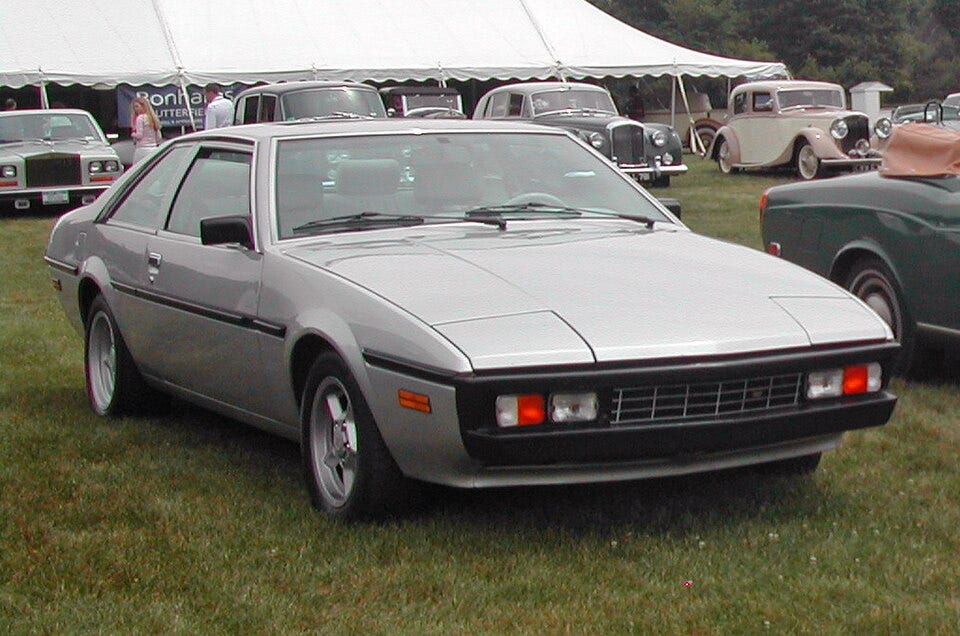
There are cars you admire because they are fast, cars you desire because they are beautiful, and cars you come to love because they appear to have been created in defiance of all sensible commercial advice. The Bitter SC belongs to the third category. And given the right road, need not apologize for its absence from the first.
I will confess at the outset that the Bitter SC is one of my favorite cars. And it has been for many years. Not because I believe it to be the finest grand tourer of its age, nor because its mechanical specifications can be arranged into a convincing gearhead argument. It is a favorite because it represents a nearly extinct form of automotive ambition: the personal car conceived by one determined man, and produced in quantities too small to trouble either the history books or the accountants.
My love here is often difficult to explain to anyone who has never seen one.
Tell them it is based on an Opel Senator and some of the magic immediately evaporates. Tell them it resembles a Ferrari 400 and they may conclude that it is merely a copy; or even, God forbid, a kit car! Explain that its body was made in Italy, that assembly eventually took place in Austria, that its automatic transmission came from General Motors, and that a handful were once sold through Buick dealers, and the whole story begins to sound less like an automobile and more like a European trade negotiation that somehow need to appease some Commie number crunchers.
And yet the Bitter SC is coherent. More coherent, in many respects, than cars born beneath the enormous roofs of established elite manufacturers. It possesses the mystique that comes from having one man at the center of it, a man who knew precisely what sort of car he wanted to drive and was stubborn enough to build it when nobody else did. Or would.
Erich Bitter had raced, tuned cars, sold racing equipment, and imported exotic Italian machinery into Germany. Experience with those endeavors appears to have taught him two enduring lessons. The first was that Italian designers understood desire. The second was that desire could be severely tested by workmanship, electrical systems, corrosion, and the availability of replacement parts.
I imagine he wanted the glamor, without the pretense.
His first answer was the Bitter CD, a low, graceful fastback built on shortened Opel Diplomat underpinnings and powered by Chevy’s 327-cubic-inch V8. Its origins lay in an Opel design exercise that General Motors had declined to produce, reportedly out of concern that such a car could trespass too close to the Corvette’s carefully guarded territory. Bitter took the abandoned idea, refined it, and persuaded Baur of Stuttgart to manufacture it.
The result looked like the offspring of an Iso Grifo and a Maserati Ghibli raised in an orderly German household. It was muscular, beautifully finished, and serviceable through Opel’s considerable European dealer network. At the 1973 Frankfurt Motor Show, Bitter reportedly collected 176 orders.
This was excellent timing in every respect except the one governed by geopolitics.
The oil crisis arrived almost immediately, bringing with it long lines, higher fuel prices, and a sudden absence of enthusiasm for large American V8 engines. Most of the orders disappeared. Bitter nevertheless continued, building 395 CDs before the Diplomat platform itself vanished in 1979.
Three hundred and ninety-five cars would be a rounding error to a major manufacturer. For a small company selling an expensive, hand-finished German grand tourer during an energy crisis, it was an act of survival.
The CD established Bitter’s method. He would not design an engine, gearbox, suspension, and electrical system from first principles. That way lay bankruptcy, unreliability, or both. Instead, he would begin with thoroughly developed Opel machinery and clothe it in a body capable of stirring emotions that no standard Opel could ever do.
When the Diplomat disappeared, the new Opel Senator became the foundation for Bitter’s next car. Thus the SC, meaning Senator Coupé, although the abbreviation possessed a pleasingly exotic ambiguity that the full translation spoiled.
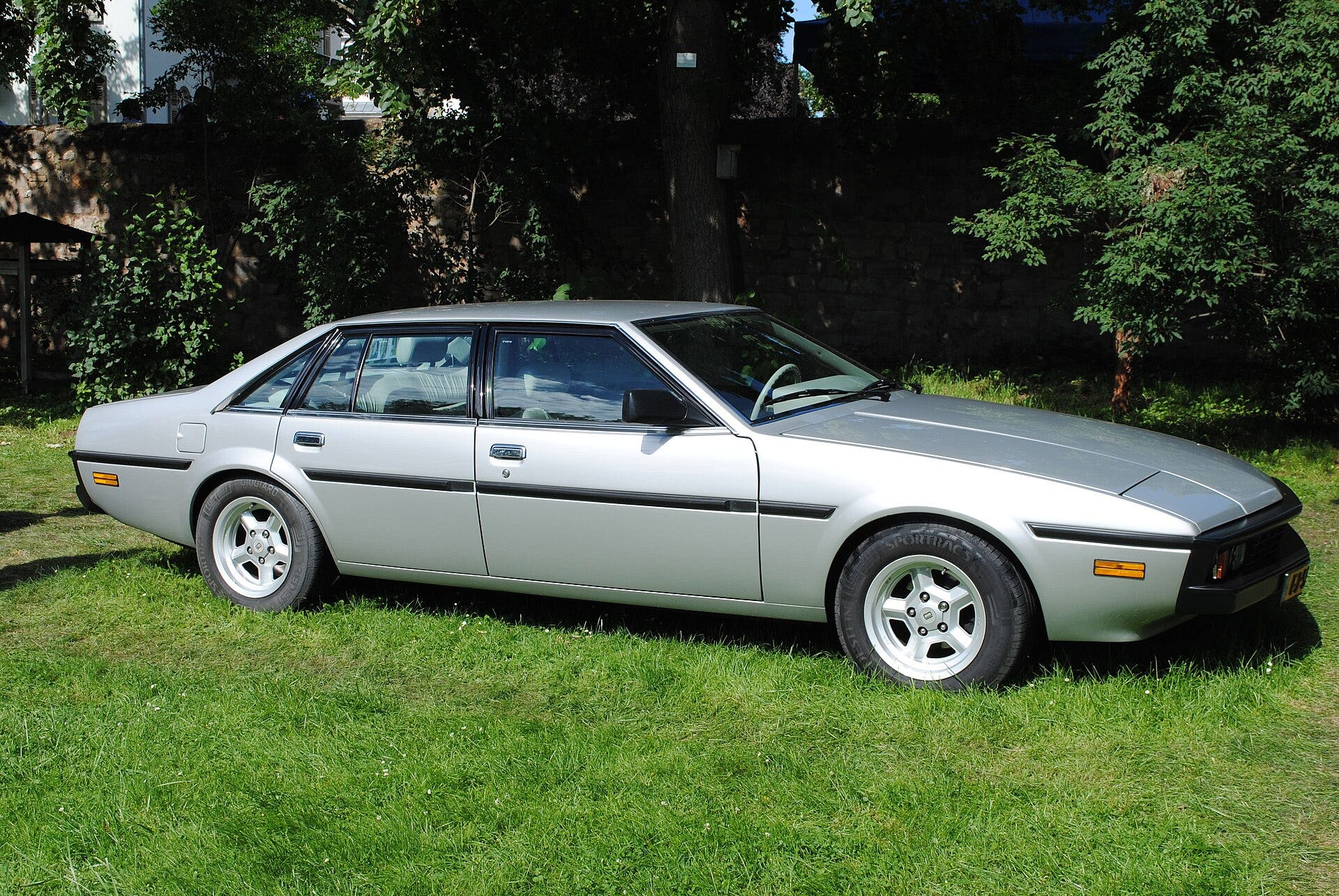
The first coupe was shown in 1979, but production cars didn’t reach customers until 1981. The styling has always invited comparison with the Ferrari 365 GT4 2+2 and its later 400 and 412 descendants. This is neither unfair nor especially damaging. Both cars share the same aristocratic geometry: a long hood, low nose, large greenhouse, formal roof, and a tail drawn with a ruler rather than modeled by the wind.
But where the Ferrari looks dramatic even when standing still, the Bitter is more reserved. Its proportions don’t announce themselves. They reveal themselves. The flanks are clean, the roof is thin, the pillars are remarkably delicate by modern standards, and the body has none of the false vents, tortured creases, black plastic ornaments, or oversized grills by which contemporary designers attempt to communicate excitement to people sitting in traffic.
The SC does not demand admiration. It merely assumes that the informed observer will eventually provide it.
Bitter made the initial sketches, while Giovanni Michelotti and Opel’s designers helped bring order and manufacturability to the idea. The shape has aged well because it was never desperately fashionable. It was modern in 1979 without being enslaved to 1979.
Underneath was considerably more Opel than many owners might have wished to mention at dinner. The SC used the Senator’s floor structure, firewall, suspension components, and fuel-injected straight-six. This was not a compromise forced upon Bitter after the design was completed. It was the point of the entire undertaking.
A mass-produced executive car from Opel offered robust mechanical engineering, parts availability, and a level of development that a tiny manufacturer could never afford to duplicate. Bitter’s contribution was not to replace what already worked. It was to elevate it. And elevate it he did.
The original 3.0-liter six produced approximately 180 horsepower. This was adequate in the strict sense that it caused the car to move whenever the gas pedal was pressed, but an automobile with Ferrari-adjacent styling and a considerable price ought to offer more than adequacy. The SC was a heavy, luxurious coupe, and 180 horsepower gave it the performance of an underpowered sporting saloon wearing a much more expensive suit.
Bitter knew it.
A V8 had been considered. The 2.5-liter unit from the Lamborghini Urraco was tested, as was a Holden V8, but cost, emissions, fuel consumption, and practicality defeated both. Turbocharging the Opel six raised concerns about heat. The most civilized answer was displacement.
Opel specialist Mantzel lengthened the stroke dramatically, increasing capacity to 3.9 liters. Power rose to around 210 horsepower in European form, although federalized American cars were rated at around 200. More significant was the increase in torque. The larger engine gave the SC the low-speed authority it had always deserved.
It didn’t turn the car into a supercar. A 3.9-liter SC still required roughly eight or nine seconds to reach 60 mph, depending on gearbox, specification, and the optimism of the driver. Even in its day, that was tolerable rather than startling.
But grand tourers shouldn’t be understood solely through acceleration figures.
Most SC buyers chose the three-speed Turbo Hydra-Matic automatic, although a five-speed manual was available. That preference tells us something about the car and the people who bought it. They were not seeking the most intimate possible relationship with every ratio. They wanted to travel quickly, comfortably, and with dignity.
The Opel six delivered its power smoothly. The automatic changed gears without interruption. The steering was relatively heavy, working through recirculating-ball hardware rather than the quick rack-and-pinion arrangement one might expect in a smaller sporting car. The tires had proper sidewalls. The suspension permitted noticeable body movement.
To the modern driver, conditioned to equate stiffness with ability and immediate response with quality, the SC may initially seem unsatisfactory. It rolls. It takes a moment to settle. A corner is not dispatched with one clean movement of the wrists. One turns, observes, and makes the small correction invited by the chassis.
But this isn’t necessarily a defect.
There is a difference between a car that is imprecise and one that is progressive. The Bitter communicates its intentions gradually. Its suspension was designed with generous travel, allowing it to absorb imperfect roads without surrendering control. The steering required effort but returned information. The car moved as a whole rather than attempting to conceal its mass behind aggressive dampers and electronic intervention.
You can imagine it on a fast two-lane road, the straight-six murmuring, the body leaning gently into a long bend, adding a fraction more steering as the tires accept the road.
The SC was a car for going somewhere. In style.
Its interior reinforced the point. The seats were broad and more like carefully upholstered furniture than the narrow buckets now fitted to cars whose owners have no intention of visiting a circuit. Leather covered the dashboard, center console, glovebox, and surfaces normally surrendered to plastic. Even decades later, surviving interiors often retain an atmosphere of restrained extravagance, not to mention the patina.
There were eccentricities, which I happen to love.
The seats were manually adjusted because Bitter believed the car would have one principal driver who would set the position once and thereafter leave it alone. The heating and ventilation controls were divided on either side of the steering wheel. The passenger door had a power-lock control, while the driver’s door relied upon the key.
This wasn’t ergonomic development as practiced by a multinational company. It was one man arranging a car according to his own logic. Such logic can be inconvenient, but it is rarely anonymous.
The rear seats were also more useful than those found in many contemporary 2+2 coupes. The SC wasn’t merely a sports car stretched until luggage and occasional passengers could be squeezed inside. It was conceived from the beginning as luxurious transport for adults, albeit adults willing to negotiate among themselves about legroom.
Manufacturing the car proved more way more troublesome than imagining it.
Baur had built the CD, but by the time the SC was ready, the company was occupied with other work, including the BMW M1. Bitter looked elsewhere. Lamborghini was considered too unstable, Bertone too expensive, and so body production eventually went to OCRA near Turin.
This did not go well.
The early bodies were reportedly made from poor recycled steel and inadequately protected. Corrosion began appearing with alarming speed, thereby combining Italian-style beauty with a very traditional Italian-car ownership concern. After approximately 79 examples, depending upon the account, Bitter transferred the work to Maggiora.
As production increased, assembly moved to Steyr-Daimler-Puch in Graz. Finished cars still returned to Bitter’s headquarters in Schwelm for inspection and testing. The route from raw steel to completed automobile was neither simple nor cheap, but simplicity and economy are not qualities often associated with hand-built grand tourers.
The United States added another layer of improbability.
In 1984, Bitter arranged to sell the SC through selected Buick dealers. General Motors hoped a sophisticated European coupe could help recover buyers being drawn toward BMW. Importing Opel-branded cars was considered less attractive because Opel lacked the necessary prestige in the American market.
This produced the unusual sight of Bitter signage appearing beside Buick showrooms, mainly around New York. One could arrive intending to inspect a Riviera and discover, a few steps away, a hand-finished German coupe assembled in Austria from Italian bodywork and powered by an enlarged Opel engine.
America has hosted stranger automotive experiments, but not many.
The federalized 1984 cars suffered from emissions equipment that reduced performance and generated excessive heat. Components reportedly melted beneath the hood. For 1985, Porsche helped develop a more satisfactory arrangement using an oxygen sensor and catalytic converter.
There is something delightful about Porsche being called upon to help make an Opel-powered, Italian-bodied boutique grand tourer legal for sale through American Buick dealerships. It’s difficult to imagine a modern corporate planning department allowing such a story to occur.
Bitter also offered other versions of the SC. A convertible appeared, elegant and exceptionally rare. Only around two dozen were built. A four-door model followed, its wheelbase stretched and roof raised to create a luxury saloon intended to challenge the Mercedes-Benz S-Class, Jaguar XJ, and Maserati Quattroporte. Just five were made.
There was even a four-wheel-drive system developed by Ferguson Research (Jensen Interceptor ring a bell?), although only a handful of equipped cars emerged.
Each variation was appealing. None was likely to improve the company’s finances.
By 1986, Bitter had entered receivership and meaningful SC production had ended. Depending upon the source and counting method, roughly 450 to 488 coupes were built. The differences between those figures matter to registrars and historians, but not to me. Whichever total you accept, there were very few to be found.
It is tempting to call the car a failure because so few were sold and the business ultimately faltered. This is the accounting interpretation of history, and accountants are entitled to it.
But cars aren’t remembered through balance sheets alone.
The Bitter SC succeeded in creating a distinct kind of automobile. It offered Italian visual drama without an Italian engine, German reliability without German austerity, and luxury without the pompousness of a Mercedes-Benz. It was exotic without becoming theatrical or dramatic.
The Ferrari 400 possessed a V12 and a more celebrated name. The Porsche 928 was faster and far more sophisticated. The BMW 6 Series enjoyed greater recognition and support. Mercedes-Benz built its coupes with a depth of engineering and manufacturing resources Bitter could only dream of.
The SC remains desirable precisely because it wasn’t the obvious choice.
Its owner had knowingly rejected the establishment. He had selected a car that required explanation, and there is a particular pleasure in owning something that can’t be summarized by its badge.
Today, it seems like a crap shoot. Rust can become a serious and expensive problem, particularly on early cars. Bitter-specific glass, trim, and body panels are extremely difficult to find. A neglected example will no doubt consume far more money than its eventual value will ever justify.
But financial justification is a dreary standard by which to judge the preservation of fascinating cars.
The fact is, Erich Bitter didn’t build the car after consulting market research about customer expectations. He built the automobile he believed ought to exist. It was refined without being conventional, glamorous without being pretentious, and sporting enough without becoming exhausting.
The Bitter SC is not great because it overcame its Opel foundations. It is great because it understood the value of them. Bitter knew that reliability, ride quality, serviceability, and mechanical familiarity weren’t enemies of exoticism. They were what allowed exoticism to become usable.
That was his real achievement.
He took the dependable skeleton of an Opel Senator, covered it with one of the most elegant bodies of the era, filled it with leather, tuned it for distance, and gave it his name.
For that, I admire him greatly.